BON VOYAGE ‘The heights by great men reached and kept Were not attained by sudden flight, But they, while their companions slept, Were toiling upward in the night.’ – H W Longfellow “That’s one small step for a man, one giant leap for mankind”, said Neil Armstrong, stepping on to the moon’s surface on 21st […]

Properties of the Indifference Curves
Indifference curves are subjective and unique to each person. Nevertheless they have in common the following properties: 1. Indifference curve must have negative slope: An indifference curve has a negative slope, which denotes that if the quantity of commodity (y) decreases, the quantity of the other (x) must increase, if the consumer is to stay […]
Diminishing Marginal Rate of Substitution and Properties of the Indifference Curves
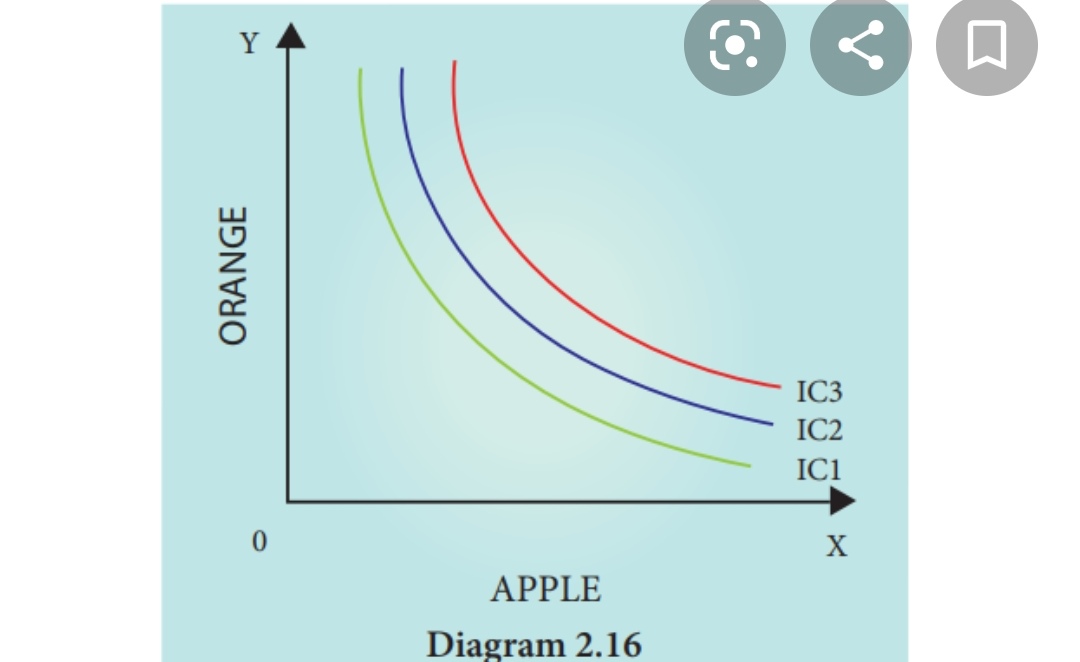
It explains the concepts of diminishing marginal rate of substitution. Since y decrease as x increases, the change in y is negative i.e., -Δy, so the equation is MRSxy =Y X However, as with price elasticity of demand the convention is to ignore the minus sign in MRSxy= Y X
How to check 10 th results 2020 – check your 10th result here @tnresults.nic.in,http://dge.tn.gov.in/,http://dge.tn.nic.in/
TN SSLC Result 2020: The Directorate of Government Exam (DGE) Tamil Nadu is expected to declare the class 10th or SSLC results on August 10 at 9.30 am, according to media reports. However, HT does not have any confirmation regarding the same. Students who have appeared in the TN SSLC examination will be able to check their result online […]
An Indifference Curve and An Indifference Map
An Indifference Curve: Different combinations of two commodities (as found in Indifference Schedule) can be presented in a diagram.Then consumer gets different points and when such points are connected,a curve is obtained. The said curve is called as “Indifference Curve”. Therefore,an indifference curve is the locus of all combinations of commodities from which the consumer […]
Ordinal analysis (or) Ordinal Utility Approach (or) Hicks and Allen Approach (or) Indifference Curve Analysis
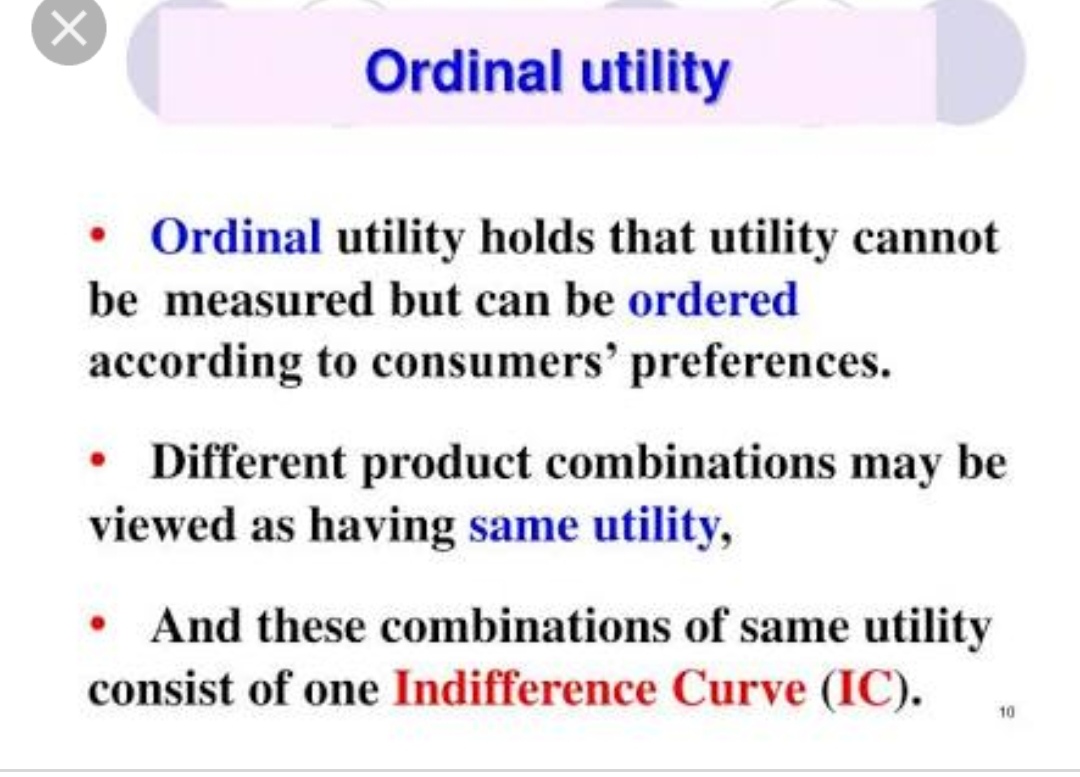
Introduction: F.W.EdgeWorth (English Economist) and Vilfredo Pareto (Italian Economist)criticised the Cardinal Utility Approach.They assumed that utility cannot be measured absolutely, but can be compared or ranked or ordered by ordinal numbers such as I, II, III and so on. Edgeworth first developed a more scientific approach to the study of consumer behaviour, known as “Indifference […]
Importance of Elasticity of Demand
The concept of elasticity of demand is of much practical importance. 1. Price fixation: Each seller under monopoly and imperfect competition has to take into account elasticity of demand while fixing the price for his product. If the demand for the product is inelastic, he can fix a higher price. 2. Production: Producers generally decide […]
Measurement of Elasticity of Demand
There are three methods of measuring price elasticity of demand. 1. The Percentage Method: ep=QPPQ´ It is also known as ratio method, when we measure the ratio as: ep =P where, %Q= percentage change in demand %P = Percentage change in price 2. Total Outlay Method: Marshall suggested that the simplest way to decide whether […]
Determinants of Elasticity of Demand
There are many factors that determine the degree of price elasticity of demand.Some of them are described below: a) Availability of Substitutes: If close substitutes are available for a product, then the demand for that product tends to be very elastic. If the price of that product increases, buyers will buy its substitutes; hence fall […]
Levels or Degrees of Price Elasticity of Demand
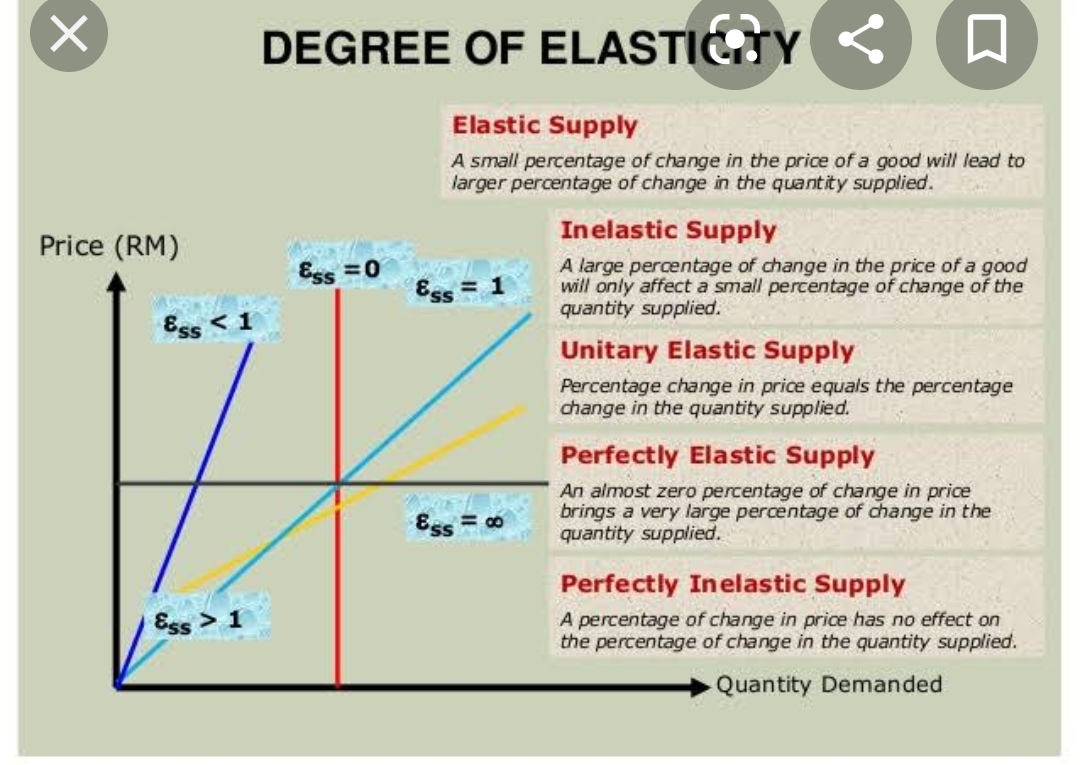
Definition: The Price Elasticity of Demand is commonly known as the elasticity of demand, which refers to the degree of responsiveness of demand to the change in the price of the commodity. 1. Perfectly Elastic Demand (Ep = ∞): The demand is said to be perfectly elastic when a slight change in the price of […]
Elasticity of Demand
The Law of Demand explains the direction of change in demand due to change in the price. It fails to explain the rate of change in demand due to a given change in price. Elasticity of demand explains the rate of a change in quantity demanded due to a given change in price. “Elasticity of […]
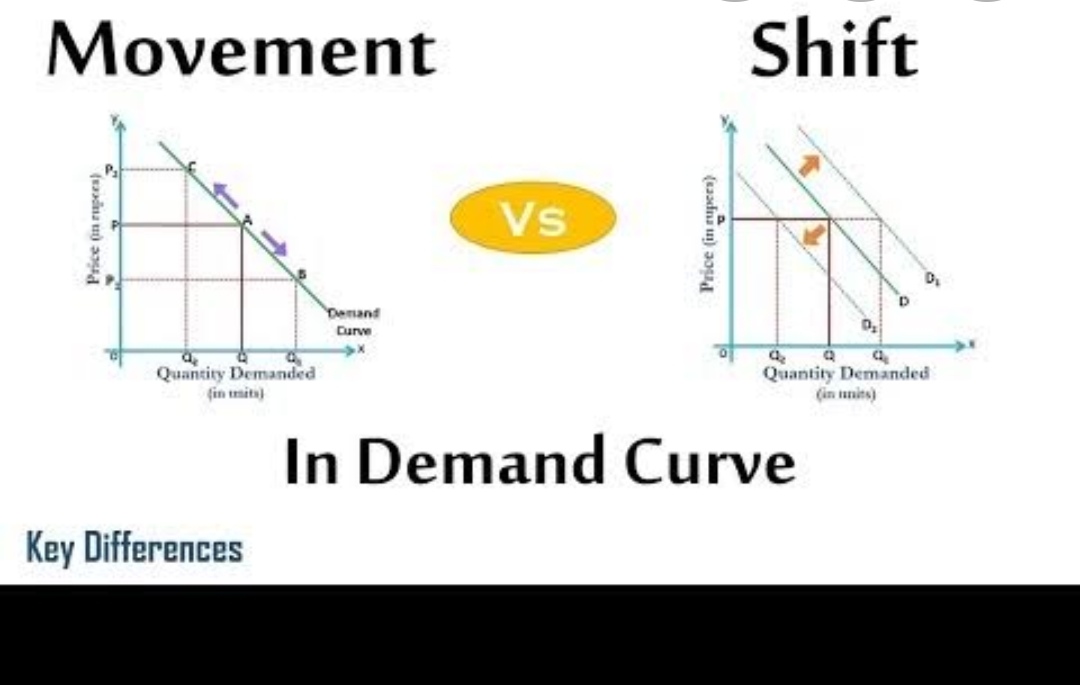
Movement along Demand Curve and Shift in the Demand Curve
In the diagram 2.7, at point A, the price OP2 and quantity demanded is OQ2. When price falls to OP3 (movement along the demand curve A to C) the quantity demanded increases to OQ3. If price rises to OP1 (movement from A to B) quantity demanded decreases to OQ1 Shift in the Demand Curve: A […]
Reasons for Exceptional Demand Curve and Extension and Contraction of Demand
Reasons for Exceptional Demand Curve:1. Giffen Paradox: The Giffen good or inferior good is an exception to the law of demand. When the price of an inferior good falls, the poor will buy less and vice versa. 2. Veblen or Demonstration effect:Veblen has explained the exceptional demand curve through his doctrine of conspicuous consumption. Rich […]
Determinants of Demand
1. Changes in Tastes and Fashions: The demand for some goods and services is very susceptible to changes in tastes and Fashions. 2. Changes in Weather: An unusually dry summer results in a increase in the demand for cool drinks. 3. Taxation and Subsidy: If fresh taxes are levied or the existing rates of taxation […]
Law of Demand
“Demand is essential for the creation, survival and profitability of a firm. “Demand in economics is the desire to possess something and the willingness and the ability to pay a certain price in order to possess it”. –J. Harvey “Demand in economics means desire backed up by enough money to pay for the good demanded” […]
Consumer’s Surplus
The concept of consumer surplus was originally introduced by classical economists and later modified by Jevons and Jule Dupuit, the French Engineer Economist in 1844. But a most refined form of the concept of consumer surplus was given by Alfred Marshall. This concept is based on the Law of Diminishing Marginal Utility. Definition: Alfred Marshall […]
The Law of Equi-Marginal Utility
The law of diminishing marginal Utility is applicable only to the want of a single commodity. But in reality, wants are unlimited and these wants are to be satisfied. Hence, to analyze such a situation,the law of diminishing marginal Utility is extended and is called “Law of Equi-Marginal Utility”. It is also called the “Law […]
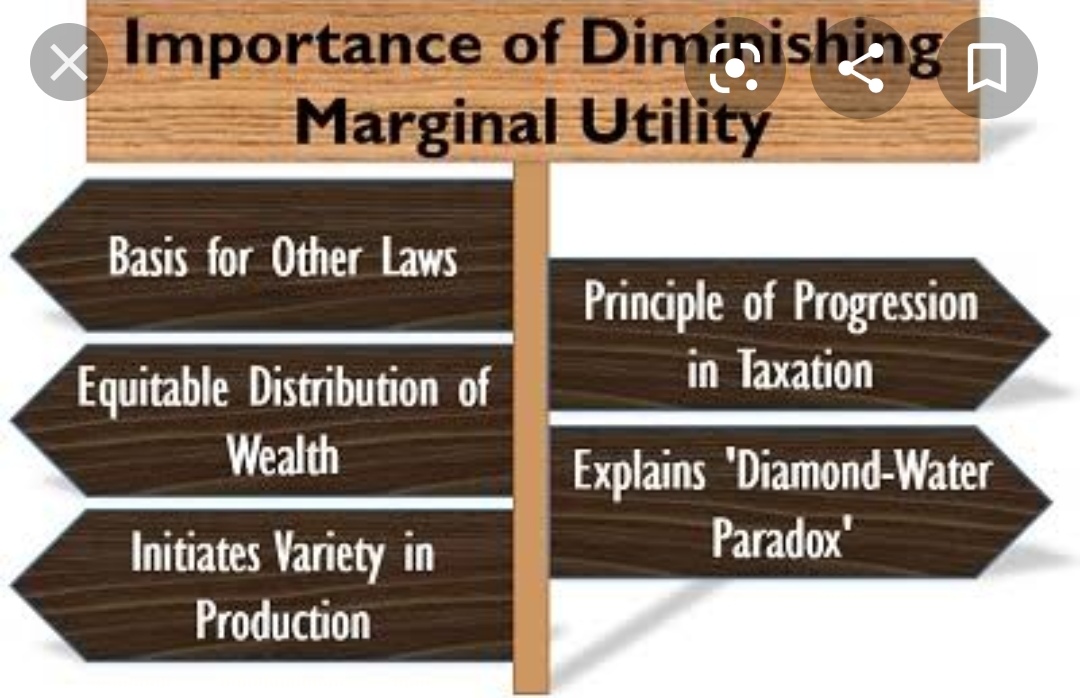
Importance of DMU
Exceptions to the Law: 1. Hobbies 2. Drunkards 3. Misers 4. Music and Poetry and 5. Readings Importance or Application of the Law of DMU: 1. The Law of DMU is one of the fundamental laws of consumption.It has applications in several fields of study. 2. This law is the basis for other consumption laws […]
Cardinal Utility Analysis
The Law of Diminishing Marginal Utility (DMU) Introduction: H.H.Gossen, an Austrian Economist was the first to formulate this law in Economics in 1854. Therefore, Jevons called this law as “Gossen’s First Law of Consumption”.But credit goes to Marshall, because he perfected this law on the basis of Cardinal Analysis. This law is based on the […]
Economic Consumption Analysis – Micro and Macro Level Consumption – How to run a family in economically
“Consumption is the sole end and object of economic activity” – J. M. Keynes Introduction: Consumption is an essential economic activity. The quantity and quality of consumption determine the standard of living of the people. Consumption is the act of satisfying one’s wants. Consumption is defined as “the use of goods and services for satisfying […]