In the case of federal system of finance, the following main principles must be applied: 1. Principle of Independence. 2. Principle of Equity. 3. Principle of Uniformity. 4. Principle of Adequacy. 5. Principle of Fiscal Access. 6. Principle of Integration and coordination. 7. Principle of Efficiency. 8. Principle of Administrative Economy. 9. Principle of Accountability. […]
Economics
Federal Finance
Federal finance refers to the system of assigning the source of revenue to the Central as well as State Governments for the efficient discharge of their respective functions i.e. clear-cut division is made regarding the allocation of resources of revenue between the central and state authorities. Division of Powers: In our Constitution, there is […]
Budgetary Procedure
Budgetary procedure refers to the system through which the budget is prepared, enacted and executed. (A) Preparation of the Budget: The Ministry of Finance prepares the Central Budget every year. At the state level the finance department is responsible for the Annual State Budget. While preparing the budget, the following factors are taken into account: […]
Union Budget and National Budget | Definition of Budget, types of Budget
budget 2021 is announced by Nirmala Sitaraman
Public Debt
In the 18th and 19th centuries, the role of the state was minimum. But since 20th century there has been enormous increase in the responsibilities of the state. Hence state has to supplement the traditional revenue sources with borrowing from individuals,and institutions within and outside the country. The amount of borrowing is huge in the […]
GST (Goods and Service Tax)
GST is an Indirect Tax which has replaced many Indirect Taxes in India.The Goods and Service Tax Act was passed in the Parliament on 29th March 2017. The Act came into effect on 1st July 2017; Goods & Services Tax in India is a comprehensive, multi-stage, destination-based tax that is levied on every value […]
Direct Tax and Indirect Tax
Direct Tax: A direct tax is referred to as a tax levied on person’s income and wealth and is paid directly to the government; the burden of such tax cannot be shifted.The tax is progressive in nature. It is levied according to the paying capacity of the person, i.e. the tax is collected more from […]
Public Revenue
Public revenue occupies an important place in the study of public finance. The Government has to perform several functions for the welfare of the people.They involve substantial amount of public expenditure which can be financed only through public revenue. The amount of public revenue to be raised depends on the necessity of public expenditure and […]
Public Expenditure
Meaning: Public expenditure refers to Government spending incurred by Central, State and Local governments of a country. Definition: Public expenditure can be defined as, “The expenditure incurred by public authorities like central, state and local governments to satisfy the collective social wants of the people is known as public expenditure”. Classification of public expenditure are […]
Functions of Modern State
The modern state is a welfare state and not just police state. The state assumes greater roles by creating economic and social overheads, ensuring stability both internally and externally, conserving resources for sustainable development and so on. (i) Defence: The primary function of the Government is to protect the people from external aggression and internal […]
Public finance and Private finance
Public finance deals with study of income, expenditure, borrowing and financial administration of the government. Private finance is the study of income, expenditure, borrowing and financial administration of individual or private companies. Both public and private finance are fundamentally similar in nature but different from each other on various operational aspects. The similarities and dissimilarities […]
Fiscal Economics
Introduction: The term ‘Fiscal Economics’ is a new one; the old and popular term of the subject is ‘Public Finance’. The subject Public Finance is related to the financing of the State activities and it discusses the financial operations of the Government treasury. The term fiscal is derived from Greek word which means basket and […]
BRICS
BRICS is the acronym for an association of five major emerging national economies: Brazil, Russia, India,China and South Africa. Originally the first four were grouped as “BRIC” before the induction of South Africa in 2010. The term ‘BRIC’ was coined in 2001. The BRICS members are known for their significant influence on regional affairs.Since 2009, […]
Association of South East Asian Nations (ASEAN)
ASEAN was established on 8 August 1967 in Bangkok by the five original member countries: Indonesia, Malaysia,Philippines, Singapore and Thailand. Later Brunei Darussalam, Vietnam, Laos and Myanmar and Cambodia joined. Besides ten members of the ASEAN, there are six “dialogue partners” which have been participating in its deliberations.They are China, Japan, India, South Korea,New Zealand […]
South Asian Association For Regional Co-Operation (SAARC)
The South Asian Association forRegional Co-operation (SAARC) is an organisation of South Asian nations, which was established on 8 December 1985 for the promotion of economic and social progress, cultural development within the South Asia region and also for friendship and co-operation with other developing countries. The SAARC Group (SAARC) comprises of Bangaladesh, Bhutan, India, […]
World Trade Organization
The WTOwas established in1995 as a successorto the GATT. It is a new internationalorganization set upas a permanent body and is designed to play the role of watch dog in the spheresof trade in goods and services, foreign investment and intellectual propertyrights. The Dunkel Draft, formulatedby Arthur Dunkel, its Secretary Generalbecame the base for WTO.Every […]
International Bank For Reconstruction And Development (IBRD) or World Bank
The World Bank The International Bank for Reconstruction and Development (IBRD), otherwise called the World Bank(WB) was established in 1945 under the Bretton Woods Conference in 1944. The purpose is to bring about a smooth transition from a war-time to peace-time economy. It isknown as a sister institution along withthe International Monetary Fund. Themembership in […]
International economics
Introduction:The subject ‘International Economics’ evolved from a simple theory of international trade was formulated to answer a few basic questions. The subject first originated in Western Europe on account of increasing importance of foreign trade in that part of the world.The contributions of classical economists like Adam Smith, David Ricardo, F.W. Taussig, Haberler, J.S.Mill and […]
Monetary Policy
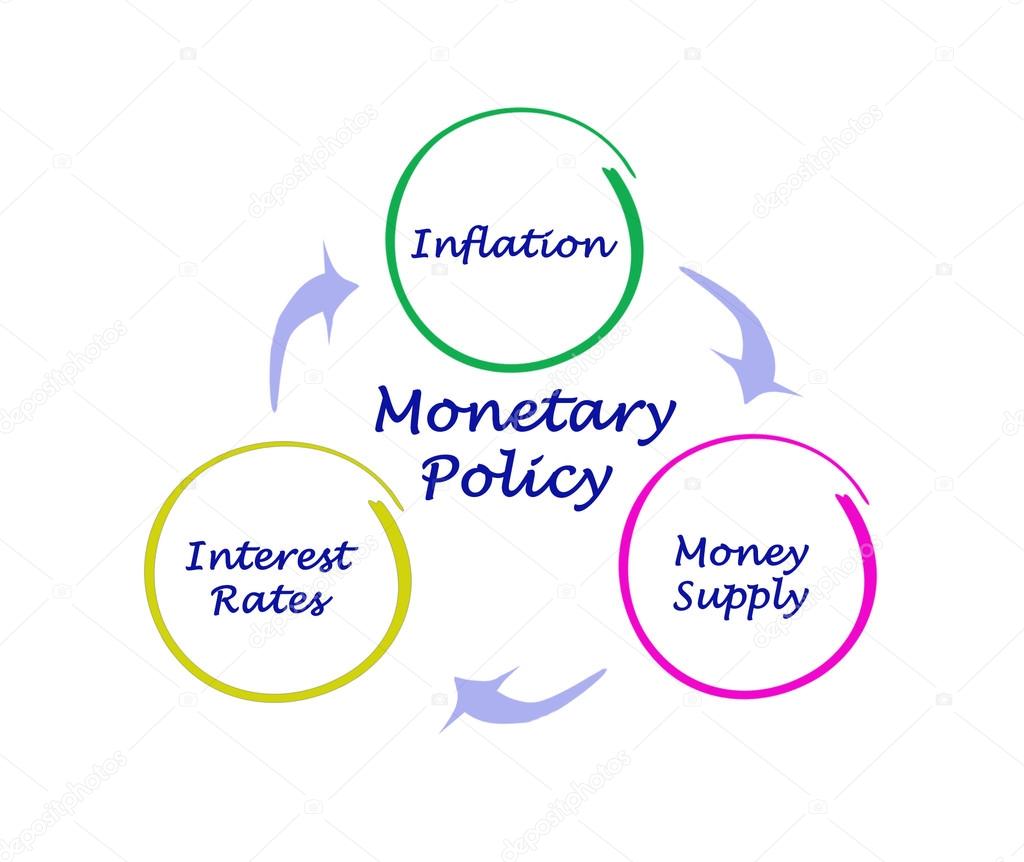
Monetary Policy is the macroeconomic policy being laid down by the Central Bank towards the management of money supply and interest rate. It is the demand side economic policy used by the government of a country to achieve macroeconomic objectives like inflation, consumption, growth and liquidity. The monetary policy gained its significance after the World […]
Reserve bank of India and industrial finance.
Reserve bank of India and industrial finance Though industries get finance from commercial banks, the quantum and the term will be very much limited generally. Commercial banks lend for short term only, as they get only short-term deposits from the public. Further lending to industries is only a fragment of the total lending by the […]