“Demand is essential for the creation, survival and profitability of a firm. “Demand in economics is the desire to possess something and the willingness and the ability to pay a certain price in order to possess it”. –J. Harvey “Demand in economics means desire backed up by enough money to pay for the good demanded” […]
Economics
Consumer’s Surplus
The concept of consumer surplus was originally introduced by classical economists and later modified by Jevons and Jule Dupuit, the French Engineer Economist in 1844. But a most refined form of the concept of consumer surplus was given by Alfred Marshall. This concept is based on the Law of Diminishing Marginal Utility. Definition: Alfred Marshall […]
The Law of Equi-Marginal Utility
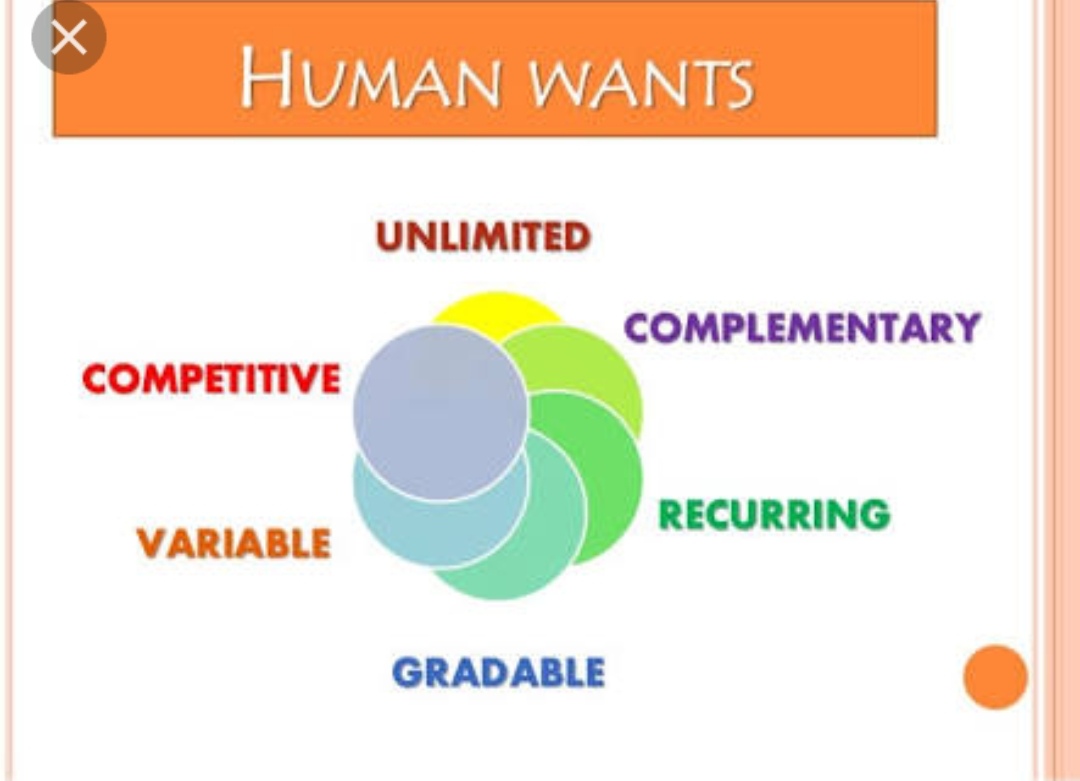
The law of diminishing marginal Utility is applicable only to the want of a single commodity. But in reality, wants are unlimited and these wants are to be satisfied. Hence, to analyze such a situation,the law of diminishing marginal Utility is extended and is called “Law of Equi-Marginal Utility”. It is also called the “Law […]
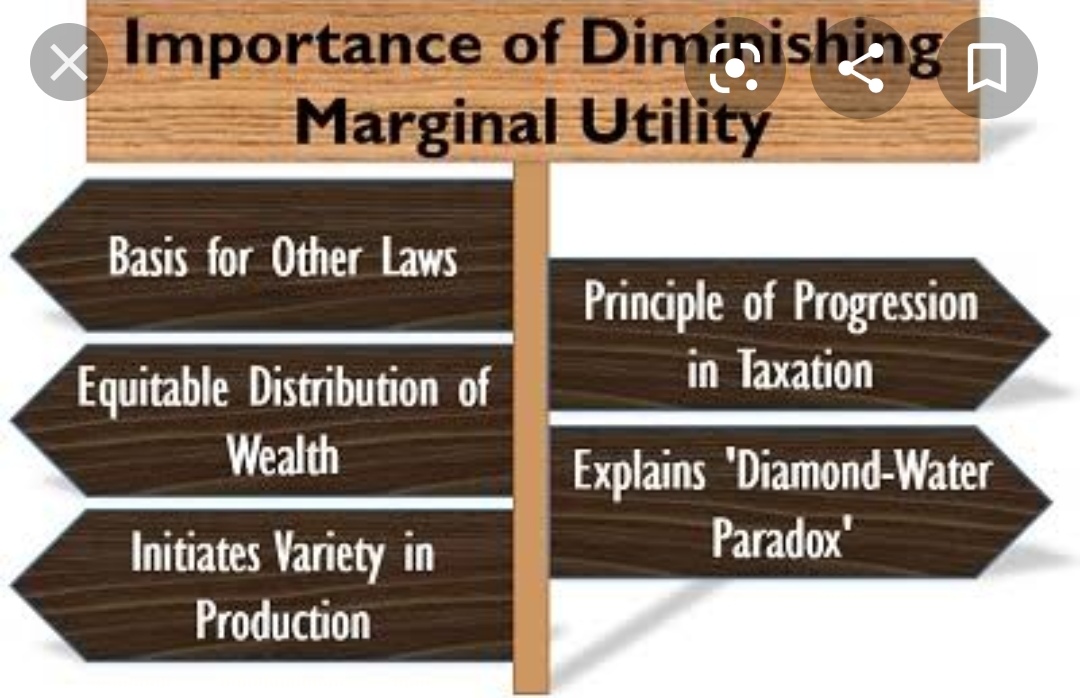
Importance of DMU
Exceptions to the Law: 1. Hobbies 2. Drunkards 3. Misers 4. Music and Poetry and 5. Readings Importance or Application of the Law of DMU: 1. The Law of DMU is one of the fundamental laws of consumption.It has applications in several fields of study. 2. This law is the basis for other consumption laws […]
Cardinal Utility Analysis
The Law of Diminishing Marginal Utility (DMU) Introduction: H.H.Gossen, an Austrian Economist was the first to formulate this law in Economics in 1854. Therefore, Jevons called this law as “Gossen’s First Law of Consumption”.But credit goes to Marshall, because he perfected this law on the basis of Cardinal Analysis. This law is based on the […]
Economic Consumption Analysis – Micro and Macro Level Consumption – How to run a family in economically
“Consumption is the sole end and object of economic activity” – J. M. Keynes Introduction: Consumption is an essential economic activity. The quantity and quality of consumption determine the standard of living of the people. Consumption is the act of satisfying one’s wants. Consumption is defined as “the use of goods and services for satisfying […]
Food production
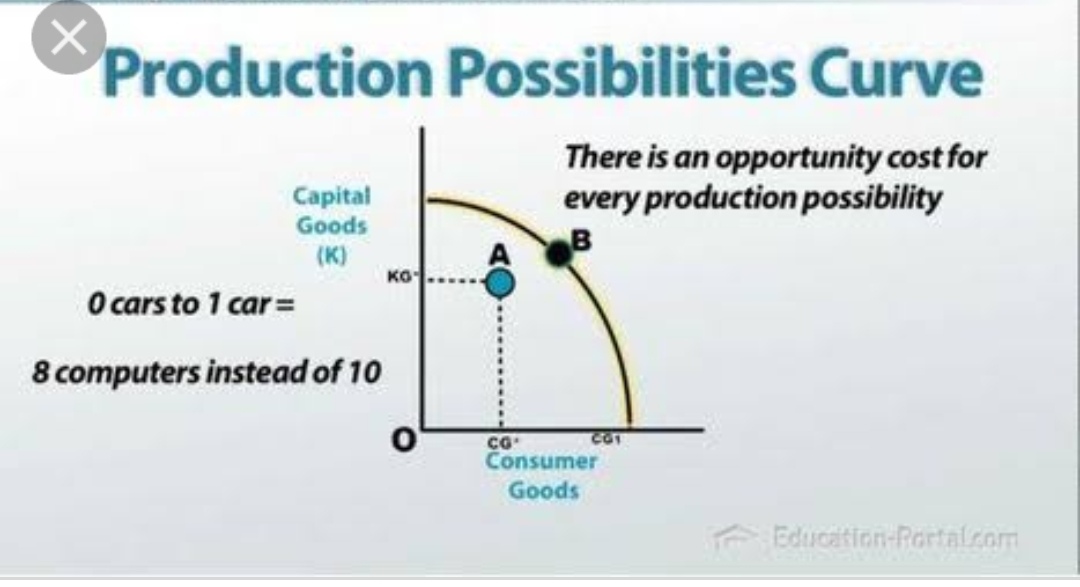
If we assume that innumerable production possibilities exist between any two-production possibilities schedule, we get the production possibility curve P1 to p6. This shows the locus of points of the different possibilities of production of two commodities, which a firm or an economy can produce, with the help of given resources and the techniques of […]
Production Possibility Curve
The problem of choice between relatively scarce commodities due to limited productive resources with the society can be illustrated with the help of a geometric device, is known as production possibility curve. Production Possibility curve shows the menu of choice along which a society can choose to substitute one good for another, assuming a givenstate […]
Basic Economic Problems
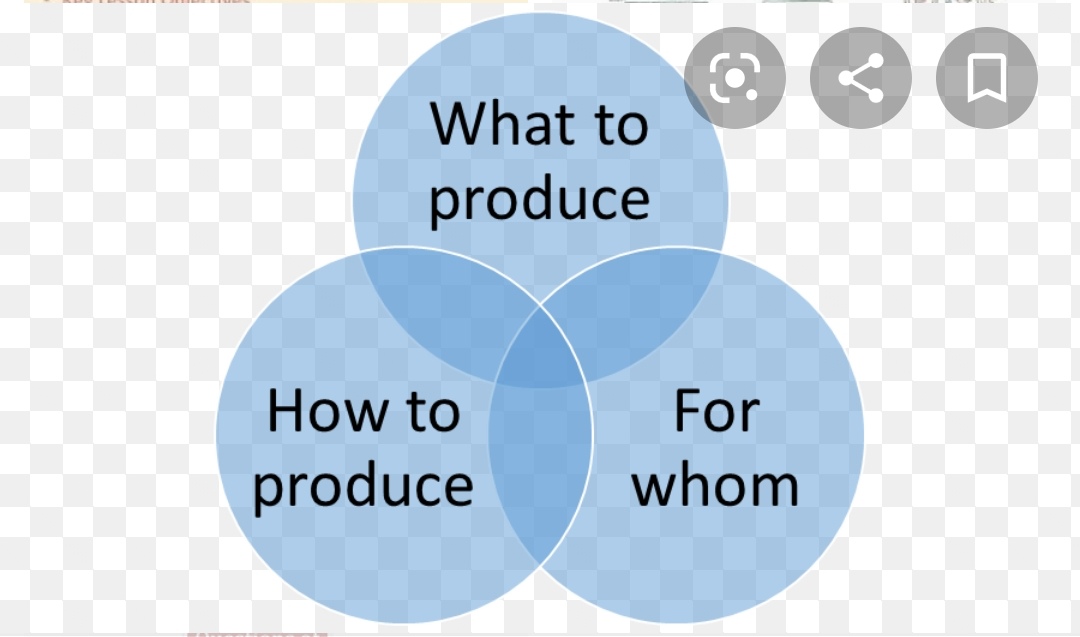
If resources are abundant and wants are so few, then there would be no economic problem. But this situation can never exist. Resources are always scarce and our wants are numerous.Hence in everysociety certain choices have to be made. What and how much to produce? Every society must decide on what goods it will produce […]
Economics:It’s Types
Economics is a rapidly growing subject and its horizon has been expanding. The basic thrust of the subject is that there should be efficient allocation of the available scarce resources to obtain maximum welfare to the people on a sustainable basis. Given below are some of the major branches of the subject, where such efficient […]
Economics:It’s Sub Devision
Economics has been divided into some branches. 1.Consumption: Human wants coming under consumption is the starting point of economic activity.In this section the characteristics of human wants based on the behaviour of the consumer, the diminishing marginal Utility and consumer’s surplus are dealt with. 2.Production: Production is the process of transformation of inputs into output. […]
Nature of Economics Laws
A Law expresses a causal relation between two or more than two phenomena.Marshall states that the Economic laws are statement of tendencies, and those social laws, which relate to those branches of conduct in which the strength of the motives chiefly concerned can be measured by money price.In natural sciences, a definite result is expected […]
Economics:It’s Methods,Facts, Theories and Laws
Methods of Economics:Deduction and Induction Like any other science, Economics also has its laws or generalisations.These laws govern the activities in the various divisions of Economics such as Consumption, Production, Exchange and Distribution. The logical process of arriving at a law or generalization in a science is called its method. Economics uses two methods:deduction and […]
Price, Market, Cost, Revenue, Equilibrium, Income
Price: Price is the value of the good expressed in terms of money. Price of a good is fixed by the forces of demand for and supply of the good. Price determines what goods are to be produced and in what quantities.It also decides how the goods are to be produced. Market: Generally, market means […]
Utility
a. Meaning: ‘Utility’ means ‘usefulness’.In Economics, utility is the want-satisfying power of a commodity or a service. It is in the goods and services for an individual consumer at a particular time and at a particular place. b. Characteristics of Utility: 1. Utility is psychological. It depends on the consumer’s mental attitude.For example, a vegetarian […]
Basic Concepts in Economics
Like other sciences, Economics also has concepts to explain its theories. A complete and clear grasp of their meaning is necessary when the theories associated with them are studied. Only a preliminary acquaintance is now attempted here. Goods and Service: Both goods and services satisfy human wants. In Economics, the term ‘goods’ implies the term […]
Scope of Economics
The scope of the subject of Economics refers to on the subject-matter of Economics. It throws light on whether it is an art or a science and if science, whether it is a positive science or a normative science. Economic: It’s subject matter Economics focuses on the behaviour and interactions among economic agents, individuals and […]
Four definitions of economics
Four definitions, each referring to particular stage of the growth of the subject of Economics, are presented here. They are: 01. Smith’s Wealth Definition,representing the Classical era; 02. Marshall’s Welfare Definition,representing the Neo-Classical era; 03. Robbins’ Scarcity Definition,representing the New Age; and, 04. Samuelson’s Growth Definition, representing the Modern Age. Wealth Definition: Adam Smith Adam […]
Introduction To Micro-Economics
Introduction: A subject should have a name or a title that facilitates a clear and correct understanding of its contents. In a subject like Economics,there are many books available with titles such as ‘Introductory Economics’, ‘Economics:An Introduction’, ‘Basic Economics’, ‘Elements of Economics’, ‘Elementary Economics’,‘Fundamentals of Economics’ etc. But these books have the same contents, though […]
Data
Data is the information about facts or numbers collected to be examined and used to help with decisions. Data are the basic raw materials of statistics. In statistics, data are classified into two broad categories: 1.Quantitative data and Qualitative data. 1. Quantitative data are those that can be quantified in definite units of measurement. These […]