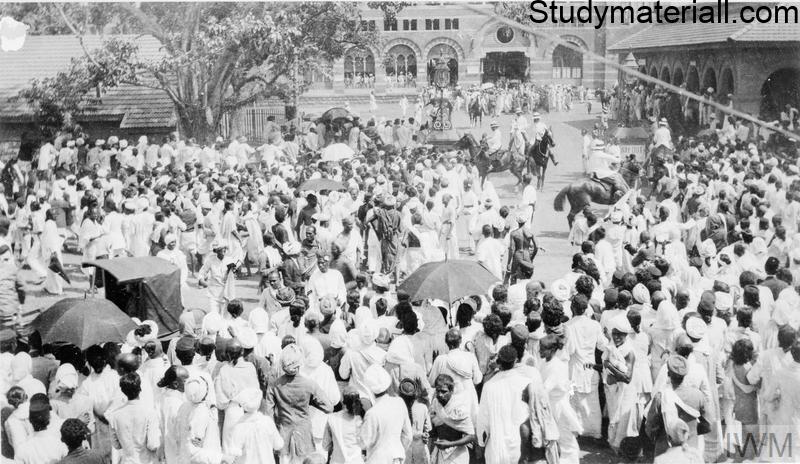
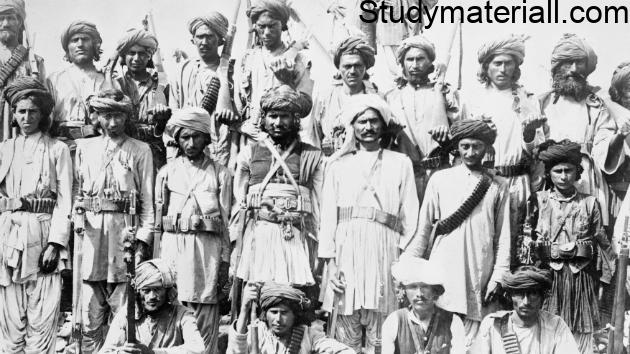
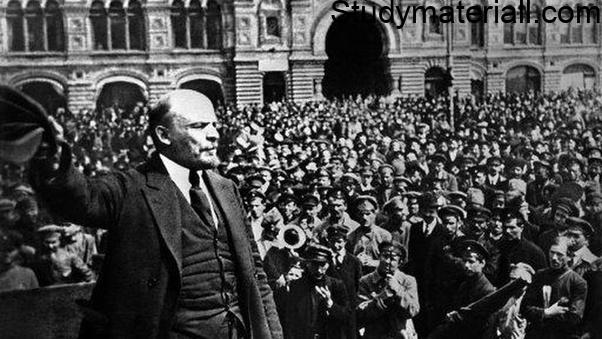
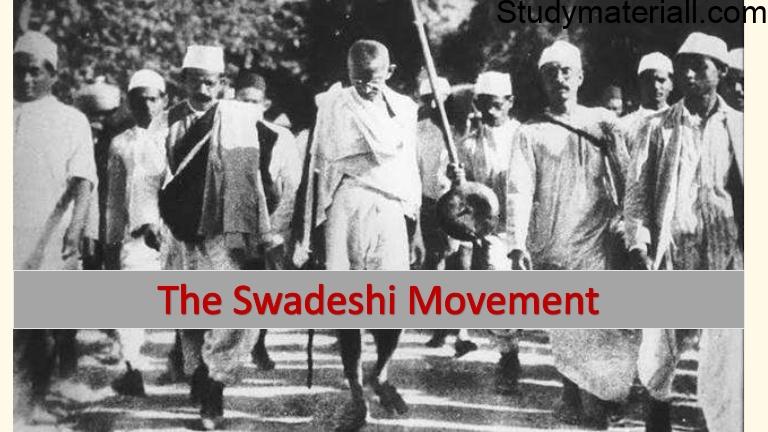
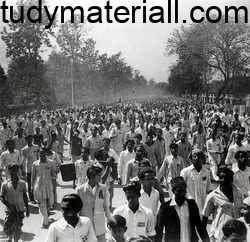
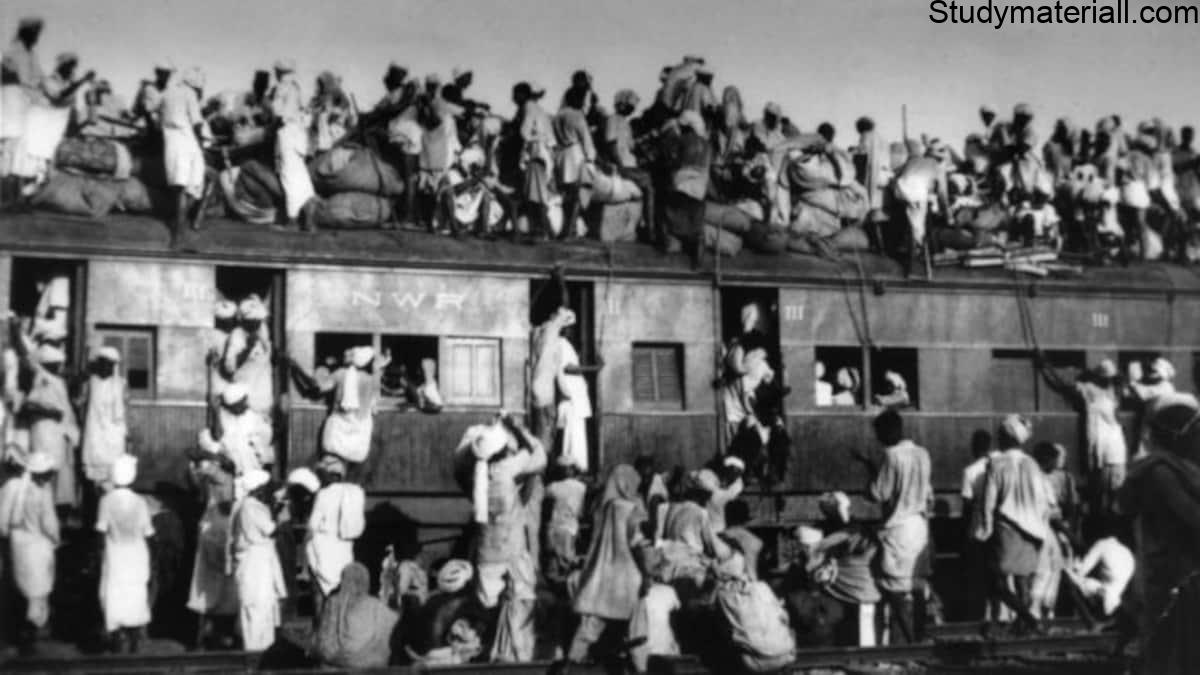
(a) Rowlatt Act It was as part of the British policy of ‘rally the moderates and isolate the extremists’ that the Indian Councils Act 1919 and the Rowlatt Act of the same year were promulgated. T hroughout the World War, the repressive measures against the terrorists and revolutionaries had continued. Many of them were hanged […]
தமிழ் பாடநூல்
Montagu–Chelmsford Reforms
Montagu–Chelmsford Reforms Edwin Montagu and Chelmsford, the Secretary of State for India and Viceroy respectively, announced their scheme of constitutional changes for India which came to be known as the Indian Councils Act of 1919. The Act enlarged the provincial legislative councils with elected majorities. The governments in the provinces were given more share in […]
Advent of Gandhi and Mass Mobilisation
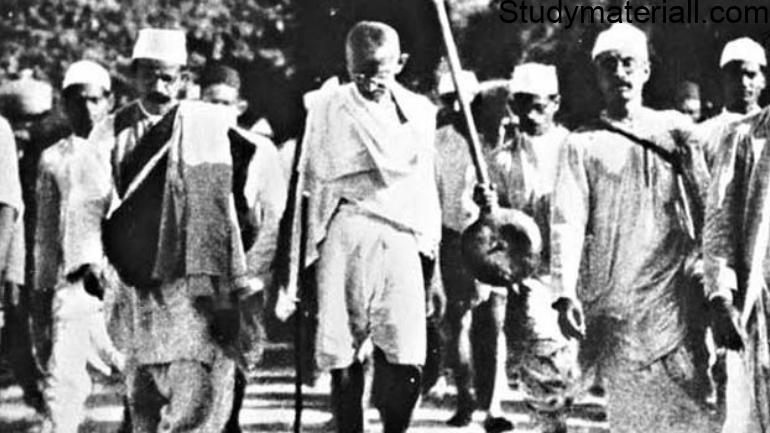
Introduction Mohandas Karamchand Gandhi was born in the coastal town of Porbandar in 1869. When he returned to India in 1915 he had a record of fighting against inequalities imposed by the racist government of South Africa. Gandhi certainly wanted to be of help to forces of nationalism in India. He was in touch with […]
Rise of Labour Movement
Rise of Labour Movement Introduction of machinery, new methods of production, concentration of factories in certain big cities gave birth to a new class of wage earners called factory workers. In India, the factory workers, mostly drawn from villages, initially remained submissive and unorganised. Many leaders like Sorabjee Shapoorji and N.M. Lokhanday of Bombay and […]
The Defence of India Act, 1915
The Defence of India Act, 1915 Also referred to as the Defence of India Regulations Act, it was an emergency criminal law enacted with the intention of curtailing the nationalist and revolutionary activities during the First World War. The Act allowed suspects to be tried by special tribunals each consisting of three Commissioners appointed by […]
Impact of the war
Impact of the War During the years prior to First World War the political condition of the India was in disarray. In order to win over the “Moderates” and the Muslim League with a view to isolating the “Extremists” the British passed the MintoMorley Reforms in 1909. The Moderates observed a policy of wait and […]
All India Home Rule League
All India Home Rule League We may recall that many foreigners such as A.O. Hume had played a pivotal role in our freedom movement in the early stages. Dr Annie Besant played a similar role in the early part of the twentieth century. Besant was Irish by birth and had been active in the Irish […]
Impact of World War I on Indian Freedom Movement
Introduction Several events that preceded the First World War had a bearing on Indian nationalist politics. In 1905 Japan had defeated Russia. In 1908 the Young Turks and in 1911 the Chinese nationalists, using Western methods and ideas, had overthrown their governments. Along with the First World War these events provide the background to Indian […]
Swadeshi Campaign in Tamil Nadu
Swadeshi movement in Tamil Nadu, notably in Tirunelveli district, generated a lot of attention and support. While the Swadeshi movement in Tamil Nadu had an all India f lavour, with collective anger against the British rule remaining the common thread, it was also underpinned by Tamil – pride and consciousness. There was a deep divide […]
Militant Nationalism – Bal Ganadhar Tilak
As pointed out earlier, thanks to the campaigns conducted by Bal Gangadhar Tilak Bipin Chandra Pal and Lala Lajpat Rai, often referred to as the Lal–Bal–Pal triumvirate, Maharashtra, Bengal, Punjab, emerged as the epicentres of militant nationalism during the Swadeshi phase. Aurobindo Ghose was another influential figure in the militant leadership. The nationalism of this […]
Boycott and Swadeshi Movements in Bengal (1905–1911)
Such efforts, both organized and spontaneous, laid the foundation for a sustained campaign against the British. The boycott and swadeshi were always interlinked to each other and part of a wider plan to make India self-sufficient. G. Subramaniam, a nationalist leader from Madras, succinctly explained the aim of the swadeshi movement as ‘a revolt against […]
Anti-Partition Movement
Both the militants and the moderates were critical of the partition of Bengal ever since it was announced in December 1903. But the antipartition response by leaders like Surendranath Banerjee, K.K. Mitra, and Prithwishchandra Ray remained restricted to prayers and petitions. T he objective was limited to influencing public opinion in England against the partition. […]
Partition of Bengal
On January 6, 1899, Lord Curzon was appointed the new Governor General and Viceroy of India. This was a time when British unpopularity was increasing due to the impact of recurring famine and the plague. Curzon did little to change the opinion of the educated Indian class. Instead of engaging with the nationalist intelligentsia, he […]
Naoroji and his Drain Theory
Dadabhai Naoroji, known as the ‘Grand Old Man of Indian Nationalism’, was a prominent early nationalist. He was elected to the Bombay Municipal Corporation and Town Council during the 1870s. Elected to the British Parliament in 1892, he founded the India Society (1865) and the East India Association (1866) in London. He was elected thrice […]
Birth of Indian Associations
(a) Madras Native Association One of the f irst attempts to organise and vent the grievances against the British came through the formation of the Madras Native Association (MNA) on 26 February 1852. An association of landed and business classes of the Madras Presidency, they expressed their grievances against the Company’s administration in the revenue, […]
Other Decisive Factors for the Rise of Nationalism
(a) Memories of 1857 Indian national movement dates its birth from the 1857 uprising. The outrages committed by the British army after putting down the revolt remained “un-avenged”. Even the court-martial law and formalities were not observed. Officers who sat on the court martial swore that they would hang their prisoners, guilty or innocent and, […]
Social and Religious Reforms
T he English educated intelligentsia felt the need for reforming the society before involving the people in any political programmes. The reform movements of nineteenth century are categorised as 1. Reformist movements such as the Brahmo Samaj founded by Raja Ram Mohan Roy, the Prarthana Samaj, founded by Dr Atmaram Pandurang and the Aligarh Movement, […]
Western Education and its Impact
(a) Education in Pre-British India Education in pre-colonial India was characterised by segmentation along religious and caste lines. Among the Hindus, Brahmins had the exclusive privilege to acquire higher religious and philosophical knowledge. They monopolised the education system and occupied positions in the society, primarily as priests and teachers. They studied in special seminaries such […]
Rise of Nationalism in India- Socio-economic Background
Socio-economic Background (a) Implications of the New Land Tenures The British destroyed the traditional basis of Indian land system. In the preBritish days, the land revenue was realised by sharing the actual crop with the cultivators. The British fixed the land revenue in cash without any regard to various contingencies, such as failure of crops, […]
Rise of Nationalism in India
Introduction The political and economic centralisation of India achieved by the British for the better exploitation and control of India inevitably led to the growth of national consciousness and the birth of the national movement. The history of nationalism in India begins with the campaigns and struggles for social reforms in the nineteenth century followed […]