வரலாறு

Consequences of Partition

T he challenges before free India included grappling with the consequences of partition, planning the economy and reforming the education system (which will be dealt with in the following lesson), making a Constitution that reflected the aspirations kindled by the freedom struggle, merger of the Princely states (more than 500 in number and of different […]

வரலாறு

Mountbatten Plan

Cabinet Mission T he changed global scenario in the postWorld War II context led to the setting up of the Cabinet Mission. Headed by Secretary of State for India, Sir Stafford Cripps, and A.V. Alexander, the mission landed in India in March 1946 and began work on its brief: to set up a national government […]

வரலாறு

Rajaji Proposals and the Wavell Plan

Demand for a Separate Nation Meanwhile, the communal challenge persisted and the Muslim League pressed with its demand for a separate nation. The Lahore resolution of the Muslim League in March 1940 had altered the discourse from the Muslims being a ‘minority’ to the Muslims constituting a ‘nation’. Mohammed Ali Jinnah was asserting this right […]

வரலாறு

The Royal Indian Navy Revolt

The Royal Indian Navy Revolt T h e economic impact of the war was manifest in rising prices, shortage of foodgrains and closure of war time industries causing retrenchment and employment. Th is merged with the anti-British sentiments evident in the mass scale of the protests revolving around the INA trials. B.C. Dutt, a rating […]

வரலாறு

Cripps Mission

Japan Storm South-East Asia T he year 1941 was bad for the allied forces. France, Poland, Belgium, Norway and Holland had fallen to Germany and Great Britain was facing destruction as well. Of far more significance to India was Japan’s march into South-east Asia. This was happening alongside the attack on Pearl Harbour, where Japanese […]

வரலாறு

Last Phase of Indian National Movement

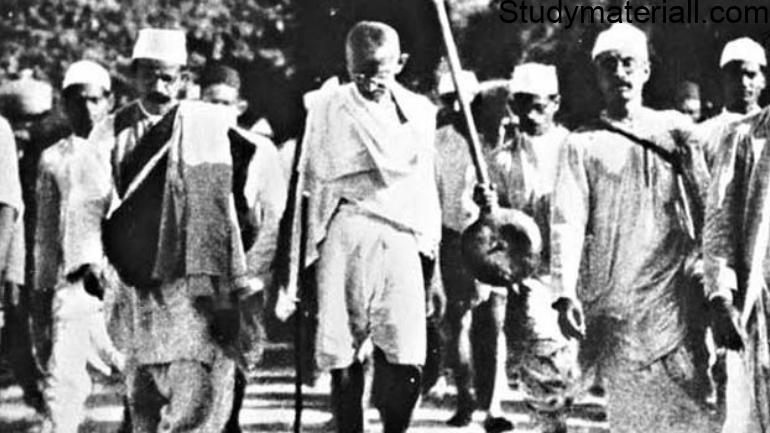
Individual Satyagraha Unlike in the past, where Gandhi’s campaign had assumed a mass character, Gandhi decided on the strategy of individual Satyagraha so that the war against fascism was not hampered. The satyagrahis were handpicked by Gandhi and their demand was restricted to asserting their freedom of speech to preach against participation in the war. […]

வரலாறு

Individual Satyagraha

Individual Satyagraha Unlike in the past, where Gandhi’s campaign had assumed a mass character, Gandhi decided on the strategy of individual Satyagraha so that the war against fascism was not hampered. The satyagrahis were handpicked by Gandhi and their demand was restricted to asserting their freedom of speech to preach against participation in the war. […]

வரலாறு

Last Phase of Indian National Movement

Introduction T he outbreak of Second World War and Britain’s decision to involve India in the War without consulting Congress ministries in provinces, provoked the leaders of Indian National Congress and Gandhi. The Congress ministers resigned in protest. Gandhi launched the individual Satyagraha in October 1940 to keep up the morale of the Congress. In […]

வரலாறு

What is First Congress Ministries

First Congress Ministries T he nationalism of the Indian National Congress was personified by Mahatma Gandhi, who rejected the narrow nationalism exemplified by the Arya Samaj and the Aligargh movement and strove to evolve a political identity that transcended the different religions. Notwithstanding the state-supported communalism of different hues, the Indian National Congress remained a […]

வரலாறு

Formation of All India Muslim League

Formation of All India Muslim League On 1 October 1906, a 35-member delegation of the Muslim nobles, aristocrats, legal professionals and other elite sections of the community mostly associated with Aligarh movement gathered at Simla under the leadership of Aga Khan to present an address to Lord Minto, the viceroy. They demanded proportionate representation of […]

வரலாறு

Religion in Nationalist Politics

Introduction Before the establishment of British Raj, Mughals and their agents had ruled large parts of the country. Large sections of the Muslims therefore enjoyed the advantages of being the co-religionists of the ruling class many of whom were sovereigns, landlords, the generals and officials. The official and court language was Persian. When the British […]

வரலாறு

Karachi Session of the Indian National Congress, 1931

The Indian National Congress, in contrast to the violent actions of revolutionaries, mobilised the masses for non-violent struggles. The Congress under the leadership of Gandhi gave priority to the problems of peasants. In the context of great agrarian distress, deepened by world-wide economic depression, the Congress mobilised the peasantry. The Congress adopted a no-rent and […]

வரலாறு

What is Kanpur Conspiracy Case, 1924- what is Meerut Conspiracy Case,

Kanpur Conspiracy Case PrisonersThe colonial administrators did not take the spread of communist ideas lightly. Radicalism spread across the British Provinces – Bombay, Calcutta and Madras – and industrial centres like Kanpur in United Province (UP) and cities like Lahore where factories had come up quite early. As a result, trade unions emerged in the […]

வரலாறு

The Round Table Conferences- what is Emergence of Dr. B.R. Ambedkar and the Separate Electorate

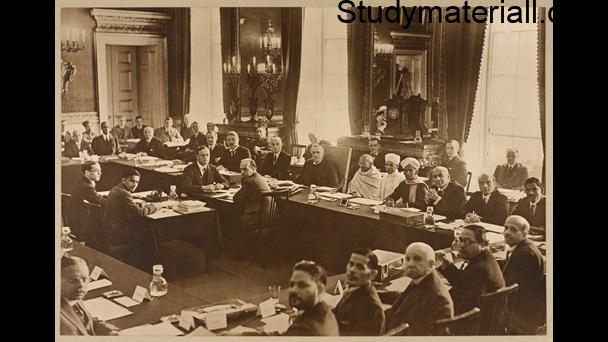
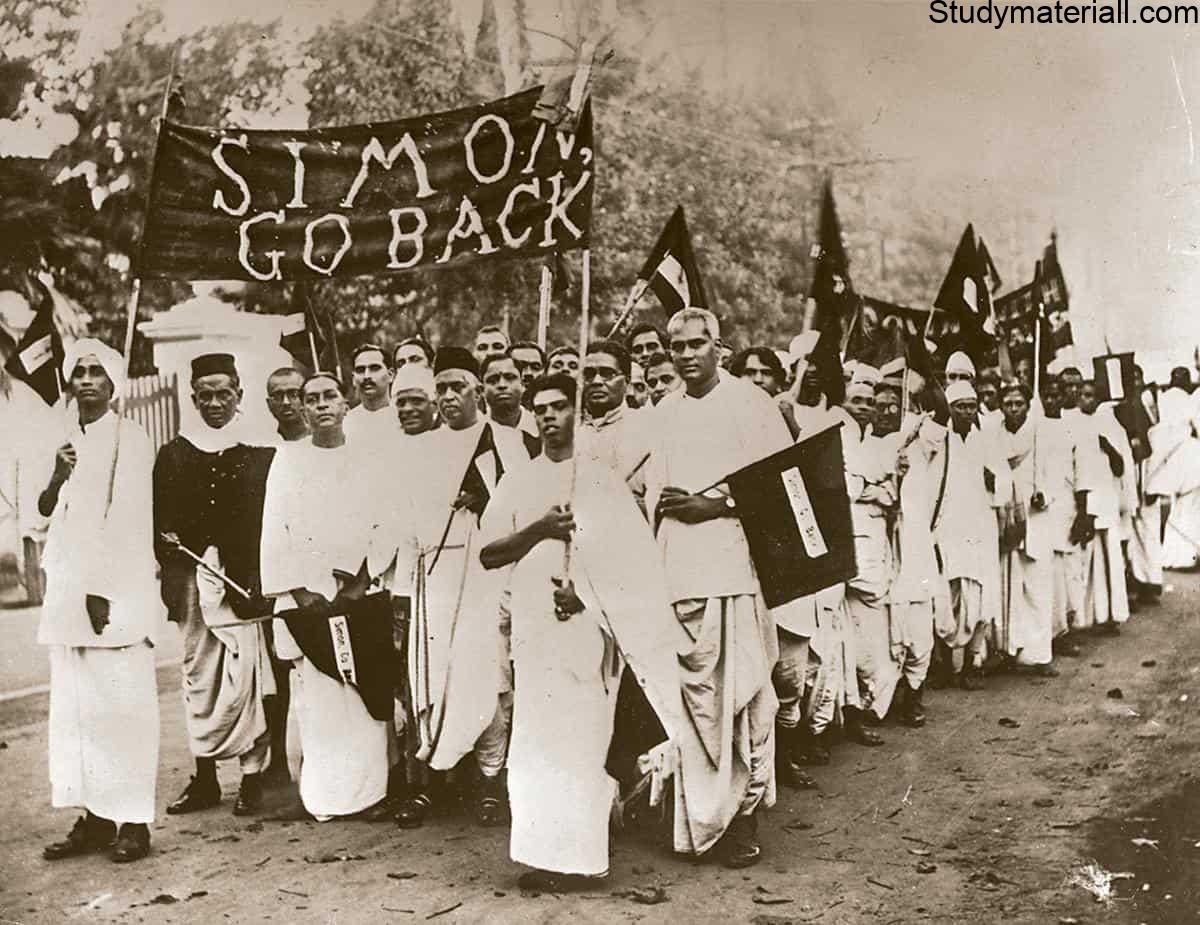
T he Simon Commission had submitted the report to the government. The Congress, Muslim league and Hindu Mahasabha had boycotted it. The British regime went ahead with the consideration of the report. But in the absence of consultations with Indian leaders it would have been useless. In order to secure some legitimacy and credibility to […]

வரலாறு

Non-cooperation Movement

(a) Rowlatt Act It was as part of the British policy of ‘rally the moderates and isolate the extremists’ that the Indian Councils Act 1919 and the Rowlatt Act of the same year were promulgated. T hroughout the World War, the repressive measures against the terrorists and revolutionaries had continued. Many of them were hanged […]

வரலாறு

Montagu–Chelmsford Reforms

Montagu–Chelmsford Reforms Edwin Montagu and Chelmsford, the Secretary of State for India and Viceroy respectively, announced their scheme of constitutional changes for India which came to be known as the Indian Councils Act of 1919. The Act enlarged the provincial legislative councils with elected majorities. The governments in the provinces were given more share in […]